The world has shifted from browsing on desktops to tapping on smartphones. Every day, millions of people shop using mobile apps. That’s where mobile e-commerce application solutions come in. Businesses that fail to adapt to mobile commerce (m-commerce) trends risk falling behind. Whether you’re launching a startup or scaling your online store, partnering with a strong e-commerce app development company is essential.
Why Businesses Need a Specialized E-commerce App Development Company?
Let’s face it: users are spoiled for choice. If your shopping app loads slowly or doesn’t feel smooth, they bounce. A professional mobile e-commerce development company knows how to create fast, secure, and user-friendly apps. From Android and iOS e-commerce apps to cross-platform builds, they ensure everything works flawlessly. They deliver mobile shopping experiences that keep customers coming back.
Essential Services Offered by E-commerce App Development Companies
What sets a great developer apart? It’s the app development services. These aren’t just tech wizards; they are business partners.
Custom App Development for Online Stores
Your store isn’t like anyone else’s, so why use a cookie-cutter app? Custom e-commerce apps are tailored to fit your brand, audience, and goals.
Cross-Platform E-commerce Apps
Companies build apps using Flutter and React Native, so you launch faster on both iOS and Android.
Native Android/iOS E-commerce App Solutions
Native builds ensure optimal performance, security, and seamless navigation, which are essential for complex shopping flows.
Craft Scalable E-commerce App Architectures
A great app today should still be great when you have 100,000 users. That’s scalability. The best developers build flexible, cloud-backed apps. They utilize modular architecture, robust APIs, and efficient databases, such as Firebase.
This kind of structure supports:
- Quick load times
- Smooth integration with CRMs, ERPs, and warehouses
- Real-time updates and inventory sync
Key Features Every E-commerce Mobile App Must Have
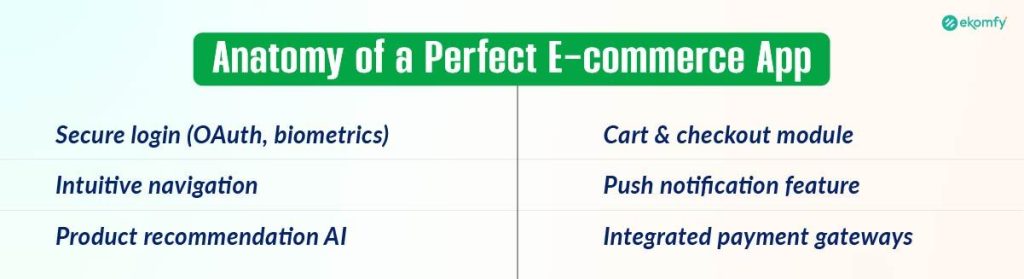
Your app isn’t just a catalog. It’s a full-blown shopping assistant in your customer’s pocket. These features are non-negotiable:
Secure Login and User Authentication
Apps must support OAuth, biometrics (such as fingerprint or Face ID), and two-factor authentication (2FA). This keeps user data safe and builds trust.
Advanced Cart and Checkout Modules
Abandoned carts hurt revenue. Seamless checkout flows, autofill options, and guest checkouts reduce friction.
Seamless Payment Gateway Integration (Stripe, PayPal, Razorpay)
Multiple payment options mean higher conversion rates. Developers integrate APIs with robust security layers to ensure smooth and secure transactions.
Push Notifications and User Engagement Tools
Push alerts for discounts, new arrivals, or cart reminders drive engagement. Firebase Cloud Messaging makes this a breeze.

Deliver a Top-Tier Mobile Shopping Experience
Design matters. A lot. Good UI/UX design encourages people to stay longer and make more purchases. E-commerce app UI/UX designers focus on:
- Clean, clutter-free layouts
- Easy navigation
- Smart search and filter tools
- Product videos and 360-degree images
Personalization, based on user behavior, also boosts sales. AI and machine learning suggest items that interest your customer.
Optimize for Cross-Platform and Device Compatibility
Your app should work perfectly across all phones, tablets, and screen sizes. Developers use React Native and Flutter to ensure consistent UI and performance on both Android and iOS.
Apps must also be adequately prepared for submission to the Google Play Store and Apple App Store. This includes meeting their design and security guidelines, passing review processes, and efficiently managing updates.
Leverage Analytics and Firebase for Growth
Building the app is just the first step. What comes next is growth. Firebase helps track:
- User sessions
- Drop-off points in checkout
- App crashes
- Campaign performance
You receive real-time data, enabling you to fine-tune your marketing and UX strategies quickly and effectively.
B2B vs. B2C E-commerce App Development Strategies

B2C apps focus on emotions and fast checkouts. Think quick browsing, flashy offers, and one-click buys.
B2B apps? They’re different. These apps often need:
- Bulk ordering
- Custom pricing tiers
- Integration with enterprise systems
- Login-based access with user roles
The best m-commerce development services understand both worlds and build accordingly.
Top 10 Winning Strategies for E-commerce App Development in 2025
Discover the ten most effective strategies that top-performing e-commerce businesses are using right now.
1. Adopt a Mobile-First Design Philosophy
Today’s users shop on the go. Your app needs to feel native to their mobile habits. A mobile-first design ensures fast loading times, easy navigation, and an intuitive browsing experience.
2. Build a Scalable and Modular App Architecture
Your store will grow, so should your app. A scalable backend using microservices and Firebase ensures that it can handle traffic spikes during sales or holiday seasons. Modular code also makes it easy to add new features later.
3. Use Cross-Platform Development Tools
React Native and Flutter aren’t just buzzwords; they save development time and reduce costs. With one codebase, you get two apps, iOS and Android, without compromising on performance or design.
4. Personalize the User Experience with AI
Customers love personal touches. Show them products based on their behavior. Machine learning tools help tailor search results, recommend items, and even adapt push notifications based on preferences.
5. Integrate Secure and Versatile Payment Gateways
Whether it’s Stripe, PayPal, or Razorpay, your app must support multiple secure payment options. Secure login with OAuth and biometrics, such as Face ID, ensures smooth and trusted transactions.
6. Track Everything with Real-Time Analytics
Use Firebase Analytics to monitor sessions, cart drop-offs, and user flow. These insights help refine UX, boost engagement, and increase conversion rates.
7. Maximize User Retention with Smart Notifications
Push notifications aren’t just reminders, they’re re-engagement tools. Segment your users, personalize messages, and time them right to boost return rates.
8. Master App Store Optimization (ASO)
Make your app discoverable. Optimize titles, descriptions, and visuals with relevant keywords and compelling copy. Maintain positive reviews by delivering excellent performance and providing prompt updates.
9. Differentiate B2B and B2C Development Tactics
For B2C, speed and emotion drive conversions. B2B apps focus on bulk functionality, pricing tiers, and integrations. Your developer should tailor solutions to meet these requirements.
10. Partner with the Right Development Company
Don’t go with the cheapest offer. Select experts who possess in-depth knowledge of UX, app performance, and security. Look for portfolios, client reviews, and post-launch support.
Hire the Right E-commerce App Developers
Hiring isn’t just about price. You need experience, creativity, and technical skill. Ask:
- Have they built responsive mobile e-commerce apps before?
- Do they offer scalable e-commerce app architecture?
- Can they integrate with your CRM, warehouse, or POS?
Red flags include vague timelines, lack of communication, or skipping over testing phases.
Conclusion
Your e-commerce success hinges on mobile. But not just any mobile app. You need something fast, scalable, secure, and beautifully designed. A trusted e-commerce app development company delivers all of that and more. From seamless checkout to personalized product feeds, they turn browsers into buyers.
FAQs
What makes an e-commerce app successful in 2025?
User experience. Speed. Security. Personalization. A successful app balances all four and evolves with customer expectations.
How long does it take to develop a custom e-commerce mobile app?
Typically, 3 to 6 months. Complex features, such as payment gateways or advanced AI recommendations, may require more time.
Is native app development better than cross-platform for online stores?
Native apps offer better performance, but cross-platform apps are faster and more budget-friendly. It depends on your goals.
How secure are payment gateways in mobile shopping apps?
Very secure, especially with APIs like Stripe and Razorpay. Developers use encryption and tokenization to protect transactions.
What’s the average cost of e-commerce app development?
Costs range from $15,000 to $150,000, depending on features, platforms, and complexity. Cross-platform options may reduce cost.