

E-commerce website maintenance costs in 2025 can range anywhere from $200 to $500 per month for small stores, $500 to $1,000 for medium-sized businesses, and $1,500 or more for large-scale enterprises. The exact figure depends on factors like your platform, store size, number of products, customization level, and the services included.
These costs cover essentials like hosting, security monitoring, software/plugin updates, performance optimization, backups, bug fixes, SEO upkeep, and customer support tools. Whether you manage these tasks yourself or hire a professional agency will also impact your total budget.
Think of your website like a car. Even if it’s brand new, you still need regular oil changes, tire rotations, and the occasional tune-up. Skipping those? You’ll break down eventually. Your e-commerce site works the same way.
Let’s dive into the 12 key factors that directly impact your monthly and yearly maintenance bills, and explore how to reduce them without compromising quality.
What is E-Commerce Maintenance Cost?
E-commerce maintenance cost refers to the ongoing expenses required to keep your online store running effectively, securely, and efficiently. This includes everything from server hosting and security patches to plugin updates and customer support systems.
These costs are recurring and usually billed monthly, quarterly, or annually. They can vary widely depending on the platform (e.g., Shopify, WooCommerce), your store size, and the features you offer.
Unlike development or setup costs (which are one-time), maintenance costs are akin to a subscription for keeping your business alive online.
Factor #1 – Hosting Services and Server Management
Your hosting environment plays a massive role in determining your overall maintenance expenses. Shared hosting plans typically cost between $5 and $20 per month, making them an appealing option for startups. However, they often lack the speed and security needed for growing stores. Cloud hosting or dedicated servers, which offer better performance and reliability, can range from $30 to $300 per month.
In addition to performance, good hosting includes uptime guarantees, bandwidth management, and 24/7 support. Paying a bit more here often reduces the need for emergency tech fixes later.
Factor #2 – Platform Type and Technology Stack
Your platform selection influences both the short-term setup costs and the long-term maintenance costs. Shopify offers an all-in-one package starting at $39 per month, including hosting and security. WooCommerce itself is free, but when you factor in premium plugins, themes, and reliable hosting, the costs can range from $20 to over $ 200 per month.
Magento, while highly customizable, is developer-heavy. Many Magento users spend $1,000 or more per month for maintenance, especially on larger stores. BigCommerce is comparable to Shopify, with a starting price of around $39 per month that scales with add-ons.
Choosing a platform that aligns with your tech skills and business goals helps avoid bloated maintenance bills.
Factor #3 – Security and SSL Certificate Renewals
Online security isn’t just about trust. It’s about survival. A data breach can destroy your reputation overnight. You’ll need to invest in SSL certificates, malware protection, and firewall services.
SSL certificates can be obtained for free through Let’s Encrypt or cost up to $200 per year for premium versions that include warranties and support. Malware scanning services run between $10 and $50 per month, while premium firewall solutions range from $50 to $100 per month.
Bundled security features from your host or a managed provider can help reduce these costs while keeping your site secure and compliant with PCI standards.
Factor #4 – Software Updates and Plugin Maintenance
Whether you’re using Shopify apps or WordPress plugins, keeping them up to date is essential for maintaining compatibility and security. Plugins that don’t receive regular updates can compromise your site or expose it to security threats.
If you’re managing updates yourself, the financial cost may be zero, but the time investment is real. For store owners who hire professionals, expect to pay between $100 and $500 per month, depending on the complexity of your site and the number of extensions you use.
Fewer, high-quality plugins result in lower maintenance time and cost over the long haul.
Factor #5 – UX/UI Optimization and Mobile Responsiveness
User experience drives sales. With over 60% of traffic coming from mobile devices, your store must load fast and look great on any screen. Failing to optimize your UI can hurt your conversions.
UX improvements, such as mobile layout redesigns, speed enhancements, and accessibility updates, can cost anywhere from $500 to $2,000 per year, depending on the frequency and complexity of the changes.
Simple tweaks can dramatically improve performance and reduce bounce rates, often paying for themselves in increased revenue.
Factor #6 – SEO and Content Management
Search engine optimization is an ongoing effort. You can’t just optimize once and forget it. Regularly updating metadata, fixing broken links, refreshing product descriptions, and creating content all come under SEO maintenance.
SEO plugin licenses, such as Yoast or RankMath Pro, typically cost between $99 and $200 annually. If you outsource SEO work to a freelancer or agency, expect to pay between $300 and $1,000 monthly.
Ongoing SEO keeps your site visible, helps you rank higher on Google, and draws in consistent traffic that converts.
Factor #7 – Payment Gateway and API Maintenance
Smooth payment processing is the backbone of e-commerce. Customers expect a seamless checkout every time. If your payment gateway or API integration fails, your sales will come to a halt.
Maintaining and testing APIs for gateways like Stripe, PayPal, and Square costs between $50 and $300 per month, depending on the level of customization in your system.
Timely updates ensure that everything works securely and in compliance with provider changes, reducing failed transactions and cart abandonment.
Factor #8 – Bug Fixes and Error Monitoring
Bugs happen. From broken links to checkout errors, they can cripple your customer experience. The key is spotting and fixing them fast.
Error monitoring tools, such as Sentry or BugSnag, cost between $10 and $50 per month, providing alerts and logs when an issue occurs. Most stores also retain a developer for emergency fixes, which can range from $300 to $1,000 per month.
The faster you resolve bugs, the less damage they cause to your reputation and revenue.
Factor #9 – Data Backups and Recovery Solutions
A single mistake or cyberattack could wipe out your site. That’s why backups are crucial. Daily automated backups protect your files and databases, costing around $5 to $30 per month.
Some hosting providers include backup services in their plans, while others charge a small fee. Manual backups are free but require time and technical knowledge. Regardless of the method, regularly testing your restore process is equally important. Reliable backups offer peace of mind and can save your store in the event of a crisis.
Factor #10 – Customer Support and Chatbot Maintenance
Customer service systems also require updates. Your chatbot scripts, knowledge base articles, and live support tools all need periodic refreshes to stay helpful and relevant.
Chatbot tools like Tidio or Drift cost anywhere from $15 to $200 per month, depending on features. Employing live agents may add $300 to $1,000 per month, and helpdesk software, such as Zendesk or Freshdesk, costs around $50 to $200 per month.
Investing here enhances the customer experience, reduces abandoned carts, and fosters trust.
Factor #11 – Analytics and Performance Monitoring Tools
Knowing how users interact with your store is critical. Analytics tools help you understand behavior, identify bottlenecks, and test improvements.
Hotjar and Crazy Egg, which offer heatmaps and session recordings, cost between $30 and $100 per month. Google Analytics remains free, but setting it up correctly and analyzing the data may require expert help. Regularly using these tools helps guide smarter decisions and optimize your sales funnel.
Factor #12 – Subscription Renewals and Licensing Fees
Many e-commerce tools require yearly or monthly renewals. Forgetting to renew can break features or expose your site to risks.
CDNs like Cloudflare or BunnyCDN start around $10 to $50 per month, improving site speed and global access. Premium theme and plugin licenses typically cost $50 to $200 per year. Developer platforms such as GitHub or Bitbucket may charge $10 to $50 per month, especially for private repositories or teams. Maintain a renewal calendar and review tools quarterly to reduce costs and prevent unexpected expenses.
How Much Should You Budget for E-Commerce Maintenance?
Depending on your business size, here’s what your typical monthly budget might look like:
| Business Type | Average Monthly Cost |
| Small Store | $200 – $500 |
| Medium-sized Store | $500 – $1,000 |
| Large Enterprise | $1,500+ |
Unexpected events, seasonal traffic, and growth can all raise costs. Always include a buffer in your budget.
How to Reduce Your E-Commerce Maintenance Cost Smartly?
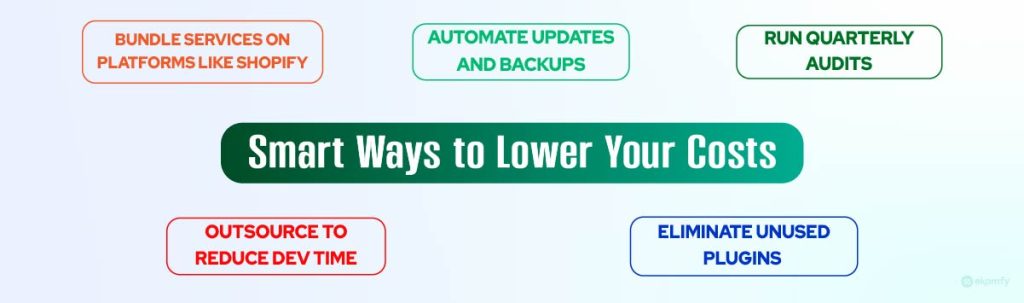
Think long-term. Cheap today may cost more tomorrow.
- Bundle services: Use platforms that offer built-in tools (e.g., Shopify or BigCommerce).
- Automate updates: Utilize plugins that update safely automatically.
- Outsource wisely: Hire a monthly maintenance provider instead of paying for each repair.
- Audit quarterly: Remove unused apps, plugins, and scripts.
- Invest early: A good setup reduces future repair bills.
Keep Costs Low Without Sacrificing Quality
Maintaining an e-commerce store is similar to caring for a house. If you don’t do minor fixes regularly, you’ll eventually face a big, costly repair. Your e-commerce maintenance cost is a necessary investment to keep your store fast, safe, and profitable.
By understanding the 12 key areas where expenses originate, you can plan, optimize where it matters, and stay focused on growth instead of firefighting technical problems. Smart maintenance today leads to a stronger business tomorrow. Book your FREE consultation now and discover how to reduce your monthly costs while scaling your store with confidence.
FAQs
What is the average monthly e-commerce maintenance cost?
Small stores typically spend between $200 to $500 per month. Larger operations may exceed $1,500.
Which e-commerce platform has the lowest maintenance fees?
Shopify has predictable fees and includes hosting, making it a budget-friendly option. WooCommerce is more cost-effective upfront, but requires more manual work.
Can I handle maintenance in-house instead of outsourcing?
Yes, but only if you have the technical skills. Otherwise, errors can become costly and time-consuming.
What tools help track and reduce maintenance costs?
Use Google Analytics, uptime monitors, and automated backup tools. Track licenses and renewals with calendar alerts.
Is e-commerce maintenance a fixed or variable cost?
It’s mostly variable. Some months you’ll spend more due to updates or fixes, while others will cover routine upkeep.